5 Questions to Ask Before Choosing a Sludge Dewatering Machine
Every plant has different requirements. Choosing a sludge dewatering machine does not depend solely on the volume of sludge to be processed, as is often assumed. Flow rate, sludge composition, available space, energy consumption and plant objectives all directly affect the performance of the installed technology.
For this reason, before considering a belt press, a screw press or any other solution, it is essential to gather key technical information. A preliminary assessment helps identify the most suitable machine and avoid undersizing, excessive operating costs or subsequent modifications.
The first question concerns the amount of sludge produced by the plant. Knowing the daily volume is not enough: it is also important to understand how this varies throughout the day and whether production peaks occur.
An industrial plant with continuous production clearly has very different requirements from a municipal wastewater treatment plant, which may experience significant daily or seasonal fluctuations.
Why is flow rate so important? Because it allows the machine to ensure operational continuity without constantly working at the limits of its available capacity.
There are many types of sludge, each behaving differently during the dewatering process.
Biological sludge, physico-chemical sludge, DAF sludge and sludge from the food industry can differ in dry solids concentration, organic content, fibre content, fats and oils. Their behaviour during flocculation may also vary considerably.
Understanding parameters such as solids concentration, Sludge Volume Index (SVI), organic matter content and the presence of oils makes it possible to select the most appropriate technology and optimise polyelectrolyte dosing.
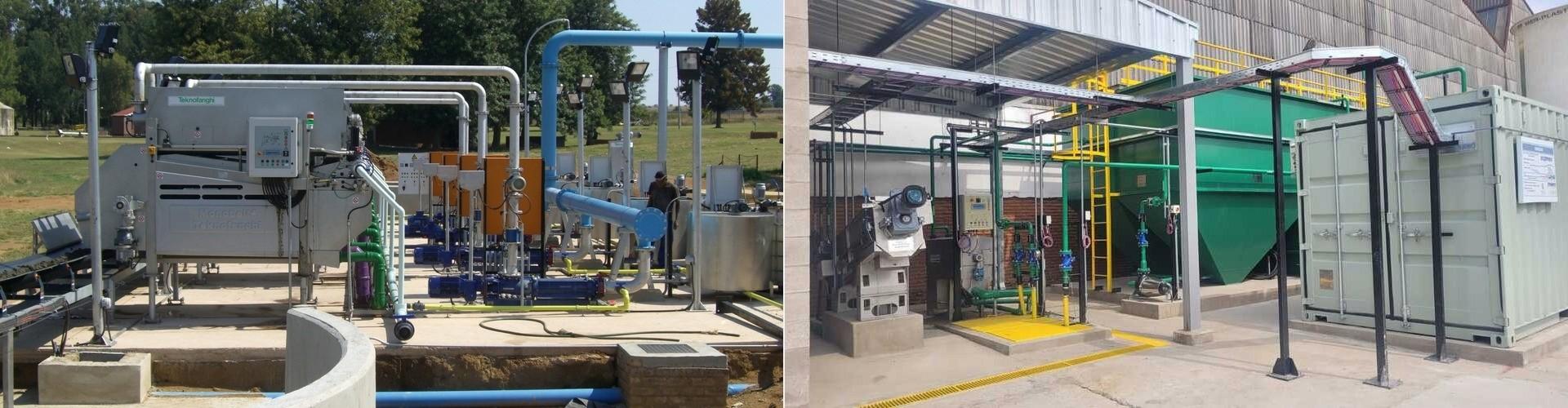
Available space affects both the choice of machine and the required ancillary equipment. In addition to the footprint of the press itself, it is always necessary to consider pumps, polyelectrolyte preparation systems, discharge screw conveyors, electrical control panels and dedicated maintenance areas.
This aspect becomes even more important in retrofit projects. Integrating new technology into an existing plant often requires compact or customised configurations that make the best use of available space without substantially changing the layout.
The purchase price is only one part of the overall investment. Energy consumption, wash-water usage, polyelectrolyte consumption, routine maintenance and spare-parts availability all affect the total cost of ownership throughout the machine’s service life.
Efficient technology helps reduce consumption without compromising performance. This is why it is important to assess total operating costs, not just the initial purchase price.
Maintenance directly affects plant availability. Machines designed with easily accessible components, automatic control systems and long-term spare-parts availability make it easier to schedule maintenance activities and minimise downtime. The level of automation also plays an important role: simple operation enables operators to monitor the process more effectively and take prompt action whenever required.
There is no single solution that is suitable for every application. Each plant has its own specific characteristics and requires a dedicated technical assessment.
For this reason, Teknofanghi supports designers, utilities and companies from the earliest evaluation stages, analysing flow rates, sludge characteristics, available layouts and operational objectives. Based on this information, it is possible to identify the most suitable solution, selecting from technologies such as MONOBELT®, SCRUPRESS® and other systems in the range, integrated with dedicated equipment for polyelectrolyte preparation, mixing and sludge handling.